
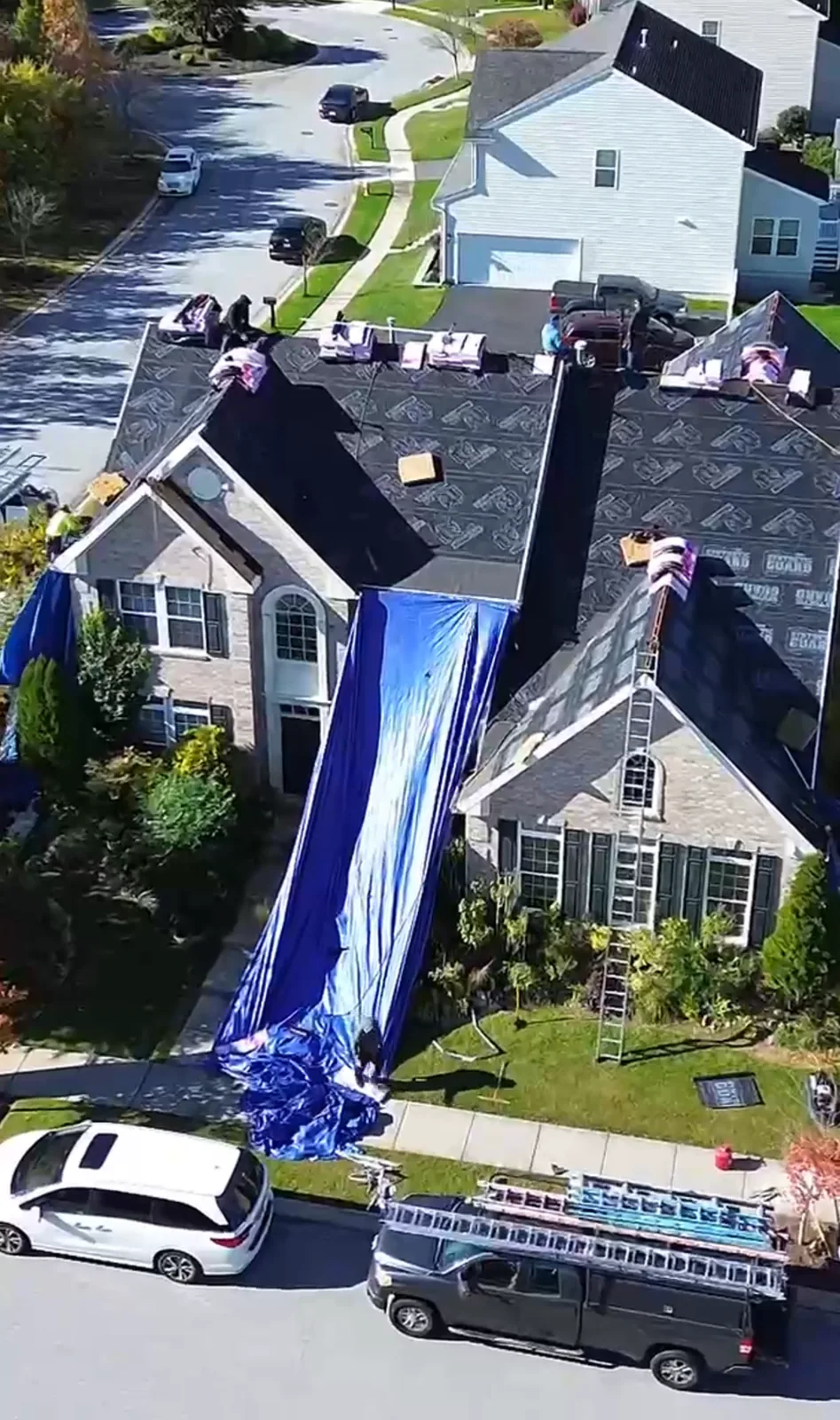
A water stain on the ceiling doesn't automatically mean you need a new roof. Most leaks start at one weak spot, and many can be fixed. The trick is knowing when a repair is the right call and when it's money spent on a roof that's already done.
What to do right now
If water is coming in:
- Protect what's below. Move furniture and electronics out of the way, and put down buckets and towels.
- Watch the ceiling. If drywall is sagging with water, keep everyone out from under it. It can come down without warning.
- Take photos of the stain, the wet area, and anything damaged. You'll want them for your contractor, and for your insurance company if a storm caused the leak.
- Stay off the roof. A wet roof is dangerous. A roofer can tarp the damaged area once it's safe.
- Look in the attic if you can do it safely. Wet insulation or a drip from the underside of the roof shows roughly where the water is getting in.
Where roof leaks usually start
Water rarely comes through the middle of a healthy shingle. It gets in at the joints and edges:
- Flashing around chimneys, sidewalls, and skylights. The metal and the sealant around it wear out, and chimney flashing is a classic trouble spot.
- Pipe boots, the rubber collars around plumbing vents, which crack with sun and age.
- Missing or lifted shingles after high winds.
- Valleys, where two roof slopes meet and water concentrates.
- Clogged gutters, which can back water up under the roof edge.
- Ice dams in winter, when snow melts, refreezes at the eaves, and pushes water back up under the shingles.
Not every drip is a roof leak. A bathroom fan that vents into the attic, or condensation in a poorly ventilated attic in cold weather, can leave stains that look just like one.
When a repair makes sense
A repair is usually the right call when:
- The roof is relatively young and in good shape overall.
- The leak traces back to one spot, such as a flashing detail, a pipe boot, or a few damaged shingles.
- The shingles around the problem still lie flat and hold their granules.
- The decking under the leak is still solid.
When it's time to replace
Replacement starts to make more sense when:
- The roof is near the end of its life. InterNACHI puts the typical life of 3-tab asphalt shingles at about 20 years and architectural shingles at about 30. Ventilation, weather, and installation quality all move that number.
- Leaks keep coming back in new places. That usually means the roof is wearing out everywhere, not in one spot.
- Shingles are curling, cracking, or shedding granules, and you're finding granules in the gutters.
- The deck is soft or sagging. Water has been getting in for a while.
- The damage covers a large area, or the shingles are discontinued and a repair won't match.
If you plan to sell within a few years, the roof's age matters too. Buyers and home inspectors look closely at it.
Will insurance cover it?
That depends on the cause. According to the Maryland Insurance Administration, homeowners policies typically cover sudden and accidental losses from perils like wind, hail, and the weight of ice or snow, but they don't cover maintenance. A leak from storm damage may be covered. A leak from a worn-out roof usually isn't. If only part of the roof is damaged, the policy may pay to repair just that part.
Call your insurance company before you commit to a full replacement on the strength of a claim.
Watch out for storm chasers
After big storms, some contractors go door to door offering free roof inspections. The Maryland Insurance Administration warns that some of them misrepresent wear and tear as storm damage to generate claims, and in extreme cases damage roofs themselves.
- Check the contractor's Maryland Home Improvement Commission license before anyone climbs on your roof.
- Don't pay more than one-third of the contract price as a deposit. That's the legal limit in Maryland.
- Be wary of anyone who pushes you to sign the same day.
Getting an honest assessment
The right answer comes from someone who looks at the roof, the attic, and the ceiling below, not a quick glance from the driveway. We'll tell you when a repair will do the job. See our roofing services, or read what goes into the cost of a new roof if replacement is on the table.
Sources
- Maryland Insurance Administration: roof replacement and homeowners insurance
- Maryland Home Improvement Commission: consumer advice
- InterNACHI: Standard Estimated Life Expectancy Chart for Homes